
The Heart of the Father
August 3, 2026
"The powerful play goes on, and you may contribute a verse."
— Walt Whitman (quoted in Dead Poets Society)
While attending a Catholic school from kindergarten through eighth grade, I studied a lot of religion. In fact, it was one of my favorite subjects, right alongside science and math. I took great joy in my ability to answer questions presented by my teachers and classmates. There was one question that stumped me many times—one that cuts to the heart of our faith:
Who is God?
I could clearly provide the book definition. He is the Creator of everything, the One who has always existed and always will. This is a great, sterile definition that some people are content with. Every word is true, but it doesn't exactly inspire us to spend years evangelizing or to endure martyrdom like some of the great saints. There is an emptiness to it when it stands alone, yet many of us settle for knowing God this way.
What if we applied that approach to the people in our own lives?
More Than a Definition
Let's say I was asked: Who is my wife?
Intuitively, we know what is actually being asked, but imagine I gave the following answer:
"She is the woman who entered into the covenant of marriage with me."
That's a perfectly accurate definition, but it tells you very little about who she actually is. I can only imagine telling people that answer and seeing the reaction my wife would give.
A better answer would describe her personality, her strengths, and maybe even share a funny story. The person asking would then learn by talking with her, watching her, and working alongside her. Only then would they have a fuller picture of who my wife truly is.
We should take that same blueprint and apply it to God.
Instead of being satisfied with the book answer, we should hear His words, watch His actions, and walk with Him. There are plenty of places to look for this. Countless theological books, lives of the saints, and internet articles will give you some answers. However, it is probably best to start with the source: the Bible.
Who is God?
The Bible is a great gift because it records God's interactions with humanity, revealing His heart to us. Often we simply hear about the Bible—we don't actually read it.
I've heard many people say that the God of the Old Testament is different from the God of the New Testament. After listening to the Bible in a Year podcast for the past six months, nothing could be further from the truth.
In the Old Testament, we encounter a God who eagerly awaits our prayers and is ready to forgive. Humanity continually turns away from Him, yet He continually calls us back. He sends Nathan to confront David after his sin. He raises up prophet after prophet to plead with Israel and Judah to repent. He even sends Jonah to Israel's enemies because He desires their conversion instead of their destruction.
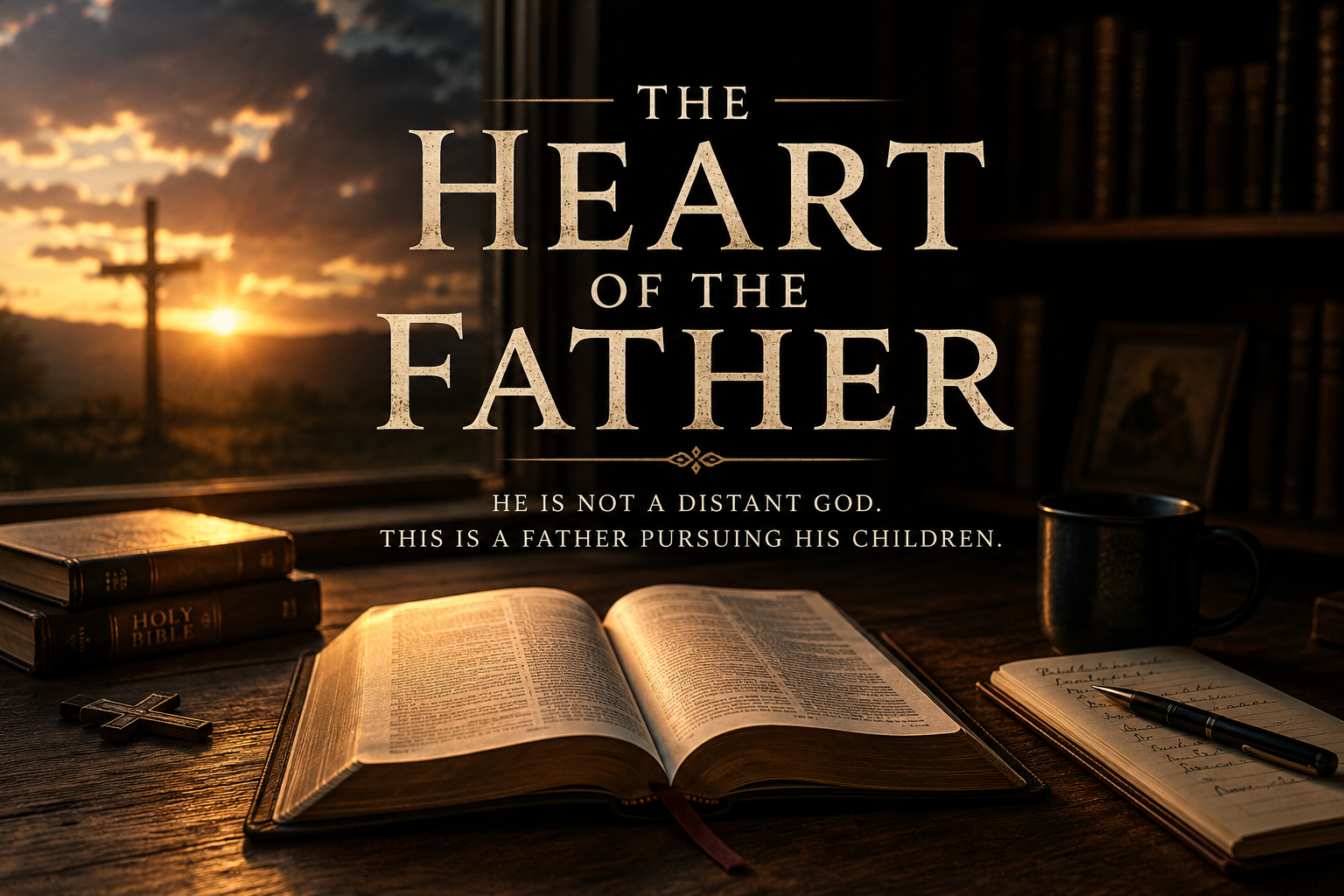
This is not a distant God looking for reasons to punish us. This is a Father pursuing His children.
Too often, we remember God's judgments while forgetting His patience. Every warning He gives is an invitation to return before judgment ever comes. If God desired only our punishment, the Incarnation would never have happened. Christ would not have entered history, taught with compassion, healed the broken, and willingly embraced the Cross for our sake. Even in the midst of His Passion, His heart remained fixed on love and forgiveness.
Read Scripture from beginning to end, and one truth becomes impossible to miss: God is a loving Father who desires His children to come home.
Contributing Your Verse
Once we know who God is, another question naturally follows:
Why did He create me?
Answering that question also answers the one we began with:
What makes life worth living?
Mr. Keating offers us a beautiful answer. Surrounded by all the boys, he quotes Walt Whitman's poem O Me! O Life!:
O Me! O life! of the questions of these recurring, Of the endless trains of the faithless, of cities fill'd with the foolish, What good amid these, O me, O life? Answer. That you are here-that life exists and identity, That the powerful play goes on, and you may contribute a verse.
Captured in these lines, we find the answer. God is greater than any of us. He created the world, stands outside of time, and knows all that will happen. Yet He ordained that you would be alive today. He has given you a role to play in the powerful drama of history. In the grand epic He has written, He desires for you to contribute a verse.
I leave you with Mr. Keating's final question:
"What will your verse be?"
⚒️ Weekly Challenge
This week, spend time getting to know God rather than simply learning about Him.
Choose one of these two approaches:
- Read one chapter from the Gospel of Mark each day.
- Begin listening to the Bible in a Year podcast with Fr. Mike Schmitz. Even one episode a day can transform the way you read Scripture.
Before you begin, simply pray:
"Lord, show me who You are."
Then pay attention to His words, His actions, and His heart.
Forge Ahead
Anvil: the place of formation.
Arrow: the mission we're sent on.
Know someone who would benefit from this letter?
Send it to a friend, brother, or fellow traveler who may need it today.
Continue with a related letter
Follow a shared story, continue a related lesson, or take a different road.
The Reason We Live
Dead Poets Society points beyond careers and possessions toward beauty, love, human dignity, and the God in whose image every person is made.
Why We Desire Glory
Our desire for glory is ultimately a desire to be known and welcomed by God—not merely praised by an unstable world.
The Cost of Doing What’s Right
The Dark Knight shows that leadership requires difficult moral decisions, accepting criticism, and paying the personal cost of doing what is right.