
The Cost of Acting Too Soon
May 7, 2026
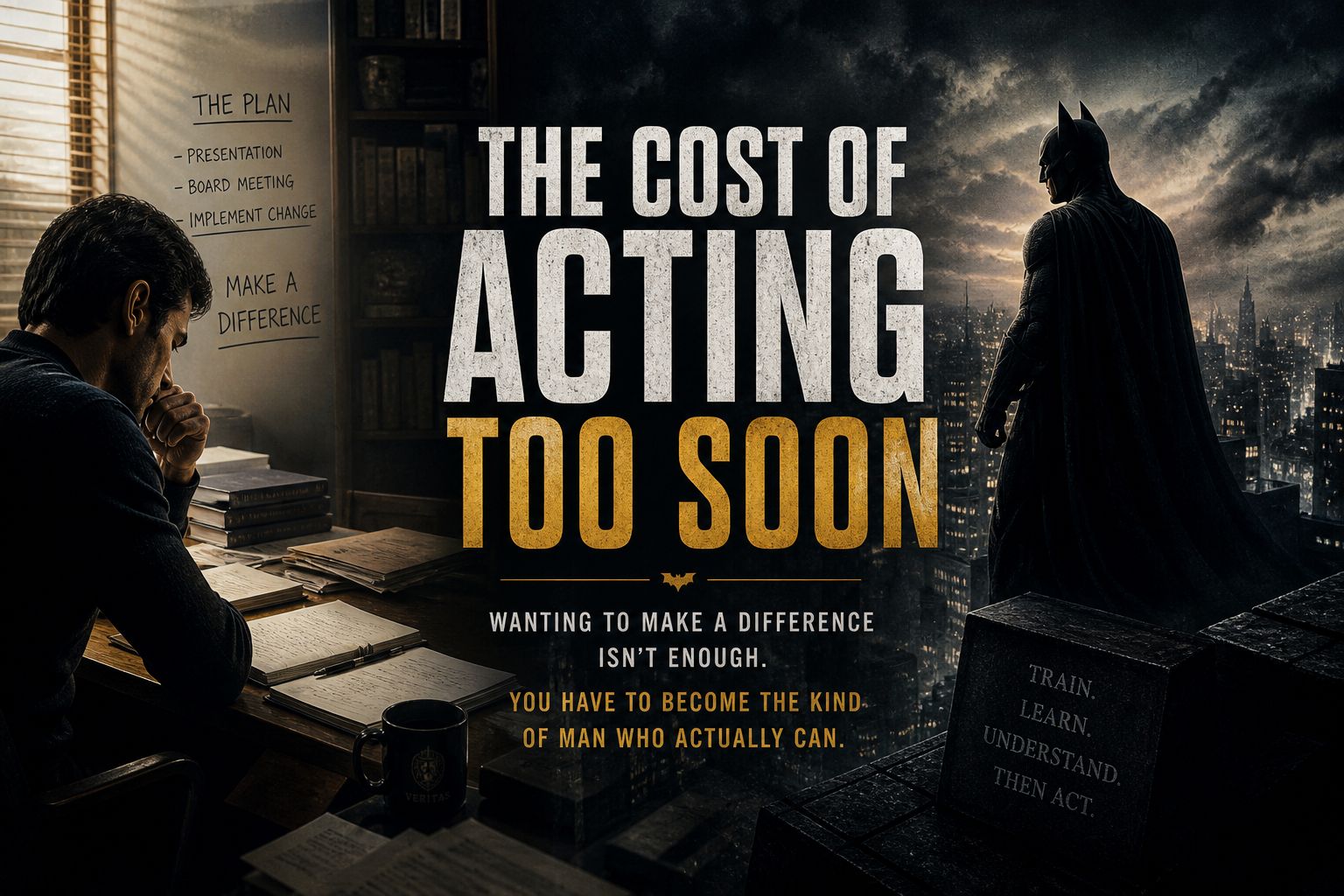
After years in Catholic school, public school, college, and teaching, I finally admitted it: something wasn’t working.
I didn’t want that to be true. But I couldn’t ignore it either.
My love for education wouldn’t let me accept defeat, so I started searching for an answer. Eventually, a trusted priest introduced me to a liberal arts education, and I was convinced I had found what I was looking for.
The excitement I felt couldn’t be contained. I wanted everyone to know about it—especially my school. I believed we needed to change, so I prepared my pitch.
I presented it to my pastor. That went well.
Then I presented it to the school board. That went well too.
But the teachers would require more. They needed an expert.
Deep down, I knew I didn’t have the knowledge to give them what they needed, so I asked someone else to present.
It failed miserably.
This is a moment I have revisited many times.
Not because I think the answer was wrong, but because my knowledge and preparation were lacking. I studied more afterward. I had individual conversations with each teacher. I tried to repair what had happened.
But it was too late.
The damage had been done.
I was trying to fix a system I didn’t fully understand.
Passion Is Not Enough
The same thing happens to Bruce Wayne in Batman Begins.
Bruce is angry about the crime consuming Gotham, so he confronts Carmine Falcone. He walks in with passion, anger, and confidence, ready to prove he isn’t afraid.
But Falcone exposes him.
Bruce doesn’t really understand the world he wants to fight. He has lived a privileged life, far removed from the desperation and corruption that epitomize Gotham’s criminal underworld. He understands his anger, but he does not yet understand the enemy.
So, Falcone has him roughed up and thrown out.
At that moment, Bruce has a choice. He can give up and let the criminals win, or he can learn.
He chooses to learn.
He steps away from Gotham. He studies the criminal world. He experiences desperation. He trains his body, mind, and will. Only after that formation does he return to the city his father loved.
This time, he is ready.
The difference wasn’t his passion.
It was his formation.
Becoming the Man Who Can
That was the difference for me too.
I had passion. I had conviction. I even had the right answer.
But I lacked formation.
Looking back, I should have taken the time to learn more deeply, tour schools, study the model, develop my understanding, and apply what I could in my own classroom. I could have become an expert before asking others to follow me.
Instead, my lack of patience and ambition blinded me.
I wanted to make a difference.
But wanting to make a difference isn’t enough.
You have to become the kind of man who actually can.
Weekly Challenge
Before you step in and try to fix something this week, pause and ask yourself one question:
Do I actually understand this?
Not on the surface—but deeply.
If the answer is no, resist the urge to act right away. Step back instead.
Take time to:
- Learn the problem more fully
- Ask questions of people who have lived it
- Observe before you speak
- Build the skill you’ll need to address it well
Because the cost of acting too early isn’t just failure. It can mean lost trust, missed opportunities, and doors that may not open again.
Take this week to slow down where you need to.
Start becoming the man who’s ready when the moment comes.
Forge Ahead
Anvil: the place of formation.
Arrow: the mission we’re sent on.
The world needs more men formed in virtue. Forward this to a brother who’s ready to grow.
Know someone who would benefit from this letter?
Send it to a friend, brother, or fellow traveler who may need it today.
Continue with a related letter
Follow a shared story, continue a related lesson, or take a different road.
Lead from the Front
Major Richard Winters teaches that trustworthy leadership begins with humility, personal example, and doing the hard work before asking it of others.
Learning to Lead Through Failure
Peter Pevensie's mistakes show that leadership is learned through humility, responsibility, and the willingness to form people rather than shame them.